Friday, January 26, 2007

"War is deceit"

Dhivehistan Report will not be responding to Vain Rooney's statement and question regarding slavery and Islam. We are very disturbed and concerned to find that some kind of a war has been declared.

We thought we were engaged in an honest intellectual debate because Sheik Saleh Al-Fawzan a member of the Senior Council of Clerics, Saudi Arabia's highest religious body, a member of the Council of Religious Edicts and Research, the Imam of Prince Mitaeb Mosque in Riyadh and a professor at Imam Mohamed Bin Saud Islamic University, Saudi Arabia's main center of learning declared in his book "Al-Tawheed – Monotheism" that 'Slavery is a part of Islam'. Muslims who contend Islam is against slavery "are ignorant, not scholars." "They are merely writers," he said. "Whoever says such things is an infidel".
Sheik Saleh Al-Fawzans writings have been translated into Dhivehi and are circulating in the Maldives. If Rooney wishes to question the claim of Sheik Saleh Al-Fawzan, we advise him to contact the Sheik.

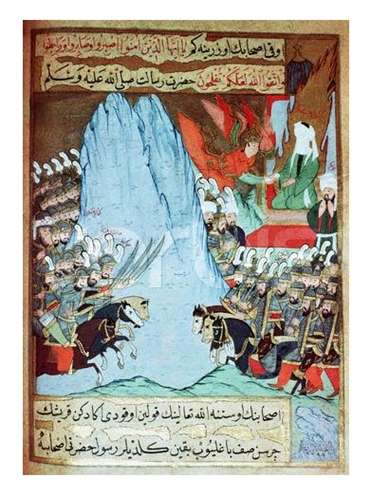
"War is deceit" according to Mohammed, Prophet of Allah. We do not want to engage in neither war nor taqiyya.
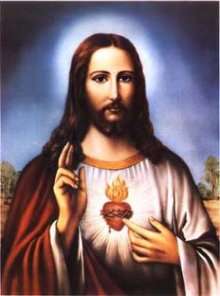
Instead, Dhivehistan Report will join our brothers and sisters and endeavor to emulate the way of Jesus of Nazareth, Prince of Peace and turn the other cheek.

The report about Sheik Saleh Al-Fawzan's claim that slavery is part of Islam has resulted in a spate of comments, some interesting and others in decidedly bad taste. We urge our readers to refrain from making comments that are irrelevant to the post and topic.
To end this posting I bring you some words of wisdom from Siddhārtha Gautama , the Buddha. Although very little remains today, for about 1500 years(which is still longer than Maldivians have prostrated towards Mecca), statues of the Enlightened One dotted the Maldive islands and the people of Maldives, our ancestors, took refuge in the wisdom this sage of the Sakyas.

"Do not believe in anything simply because you have heard it. Do not believe in anything simply because it is spoken and rumored by many. Do not believe in anything simply because it is found written in your religious books. Do not believe in anything merely on the authority of your teachers and elders. Do not believe in traditions because they have been handed down for many generations. But after observation and analysis, when you find that anything agrees with reason and is conducive to the good and benefit of one and all, then accept it and live up to it."- Gautama Buddha

Wednesday, January 24, 2007

Blinders: Prelude to the reply to Rooneys question.

Pointing to a tree close at hand Arahat Mahinda asked King Devanampiyatissa for its name. The King replied that it was a mango tree.
"Are there any other mango trees besides this?"
"There are many mango trees" replied the King.
"And are there any other trees besides this mango tree and other mango trees?"
"There are many other trees" replied the King "but they are not mango trees".
"And are there besides these mango trees and those which are not mango, yet other trees?"
"There is this mango tree", said the king.
"Thou hast shrewd wit, O Ruler of Men" said Arahat Mahinda


Blinders are a set of leather straps attached to the bridle of a horse to prevent it from seeing to its side. They are used to keep horses from being distracted or spooked. The constraints of our awareness act like a horse's blinders, which cut the overall scene into small sections, each telling a different story, and none reflecting the view as a whole.In many societies, the horizens of people's vision is restricted brutally through rigid ideology and abject fear; these function like blinders on a horse to channel people's energies into socially desirable activities.


Leonardo da Vinci, Italian painter, draftsman, sculptor, architect, and engineer whose genius, perhaps more than that of any figure, epitomized the Renaissance humanist ideal. Against speculative book knowledge, which he scorned, he set irrefutable facts gained from experience. Saper vedere ("knowing how to see") became the great theme of his studies of man's works and nature's creations.

If you do not know that life is dear to all, and putting yourself in the place of the other you should not kill nor cause to kill, you may not see the killing of the men of an entire tribe and selling the women and children as slaves as a horrendous act.

Tuesday, January 23, 2007

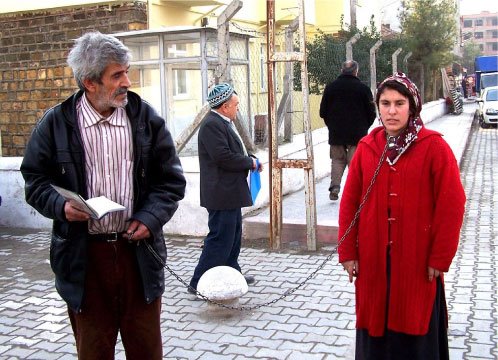
Faces of Islam: keeping your daughter close and protected...

As an increasing number of Maldivians copy the lifestyle of Muslims from Pakistan, Arabia, Egypt .etc..we can expect more shocking and inhuman behaviour. Shocking and disgusting that is, to those whose brain cells still function. The photograph from Turkey shows a man keeping his daughter close and well protected from the predations of other men. To visit the original site click here.

"Maldives continues to discriminate against women"

"In a recent meeting of the United Nations General Assembly’s Committee on the Elimination of Discrimination against Women, a Maldive government minister, Mrs. Aishath Didi, described the prohibition on women heads of state as “odd” and “an anachronism”. The fact is that Islam clearly does not allow female heads of state.
Until 31 December 1952, the Maldive constitution allowed for a female head of state. As late as 1952 a woman (who is still alive) was nominated to become regnant monarch. The nomination was vetoed by the mullahs who insisted on removing this loophole when a new constitution was enacted on New Year's Day 1953.
Until the mid 20th century the Maldives was only nominally Islamic, with custom and traditional norms taking precedence over Islam in almost every walk of life. Until 1964, every year on a prescribed day, the chief mullah (this office is now merged with that of the president of the republic) issued a proclamation reminding Maldivians and the government of their obligations under Islam. These were promptly ignored by both the citizenry and the government. Maldive women had the freedom to dress according to indigenous norms and give their children Divehi language names. They also had the freedom to be governed by female rulers. One by one, these indigenous freedoms were assaulted by the mullahs. It looks increasingly likely that very soon every Maldive women would be forced into the outlandish Islamic head-dress called hijab by decree."

The above is from an interesting article at maldivesroyalfamily.com that descibes how the Maldives has back-pedalled on giving equal rights to women.

"The Maldives acceded to the Convention on the Elimination of All Forms of Discrimination Against Women (CEDAW) on 1 July 1993. In spite of this it continues to violate international law in contravention of CEDAW.
Upon accession the Maldives made the following reservation:
1.The Government of the Republic of Maldives will comply with the provisions of the Convention, except those which the Government may consider contradictory to the principles of the Islamic Sharia upon which the laws and traditions of the Maldives is founded.
2.Furthermore, the Republic of Maldives does not see itself bound by any provisions of the Convention which obliges to change its Constitution and laws in any manner.

On 23 June 1999 the Maldives modified the reservation as follows:
1.The Government of the Republic of Maldives expresses its reservation to article 7 (a) of the Convention, to the extent that the provision contained in the said paragraph conflicts with the provision of article 34 of the Constitution of the Republic of Maldives .
2.The Government of the Republic of Maldives reserves its right to apply article 16 of the Convention concerning the equality of men and women in all matters relating to marriage and family relations without prejudice to the provisions of the Islamic Sharia, which govern all marital and family relations of the 100 percent Muslim population of the Maldives .

By basing a reservation to an international treaty on domestic law and changing a reservation after it has been made, the Maldives is in breach of Articles 27 and 19 respectively, of the Vienna Convention on the Law of Treaties. After a State Party has bound itself to a treaty under international law it can no longer submit new reservations or extend or add to old reservations. It is only possible to totally or partially withdraw original reservations.
The Maldives submitted the revised reservations after it enacted a new constitution that violated CEDAW nearly four years after acceding to the convention.

In the new reservations, a reference was also made to the Maldive authorities' ad nauseam claim that the Maldives is 100% Islamic. This reference was not made in the earlier reservation. In 1998 a number of Maldive Christians were arrested and tortured in prison, many of them women. Several American and European nationals were deported following the arrest of the Maldive Christians. The Maldive mullahs felt that it was necessary to issue a warning to the international community and teach the world a lesson over the issue of the local Christians. This warning to the world came in the form of the deportations and the amended reservations to CEDAW."

The editorial is important reading for Maldivians. To read the full article click here.

Saturday, January 20, 2007

'Slavery is a part of Islam' - Al Fawzan – a member of the Senior Council of Clerics, Saudi Arabia's highest religious body

A leading Saudi government cleric and author of the country's religious curriculum believes Islam advocates slavery.
"Slavery is a part of Islam," says Sheik Saleh Al-Fawzan, according to the independent Saudi Information Agency, or SIA.
In a lecture recorded on tape by SIA, the sheik said, "Slavery is part of jihad, and jihad will remain as long there is Islam."
His religious books are used to teach 5 million Saudi students, both within the country and abroad, including the United States.
Al Fawzan – a member of the Senior Council of Clerics, Saudi Arabia's highest religious body – says Muslims who contend Islam is against slavery "are ignorant, not scholars."
"They are merely writers," he said, according to SIA. "Whoever says such things is an infidel."
Al-Fawzan's best-known textbook, "Al-Tawheed – Monotheism," says most Muslims are polytheists, and their blood and money are therefore free for the taking by "true Muslims."
SIA said although the Saudi government claims religious curriculum is being reformed, Al-Fawzan's books are still in wide use.
Al-Fawzan is a member of the Council of Religious Edicts and Research, the Imam of Prince Mitaeb Mosque in Riyadh and a professor at Imam Mohamed Bin Saud Islamic University, Saudi Arabia's main center of learning for the strict Wahhabi interpretation of Islam.
SIA noted Al-Fawzan, a leading opponent of curriculum reform, opposes elections and demonstrations as Western influences, is against Arab women marrying non- Arab Muslims and has issued a fatwa forbidding the watching of television.
Al-Fawzan has threatened to behead a Saudi writer and scholar, Sheik Hassan Al-Maliki, for his criticism of Wahhabism, according to SIA. Al-Maliki was fired from his position with the ministry of education after writing a 50- page paper criticizing Al-Fawzan's book "Al-Tawheed."

With thanks to WorldNetDaily

Friday, January 19, 2007

Women Workers: Forced Confinement, Labor Exploitation, and Sexual Abuse

“We were always kept in our rooms…they locked the doors from the outside.” -- Indian Muslim woman employed as a hospital cleaner in Jeddah, 1998 - 2000.

“I was not allowed to leave the house.” -- Filipina Christian woman who worked for a Saudi family in Jeddah for four months in 2003.

Many low-paid women migrants in Saudi Arabia endure abysmal working conditions. Work days of at least twelve hours are typical for many of them. Overtime is at best a privilege that employers bestow, not a legal right. Other frequently mentioned complaints include being obliged to perform tasks not remotely relevant to a job description (such as massage), inadequate food, denial of vacation benefits, and prohibition of telephone contact or any other form of direct communication with family members in their home countries.
Some of the women whom we interviewed also noted that their living conditions afforded little in the way of personal privacy and security. In some cases, women did not have private, locked sleeping quarters. In other cases, women who were locked in at their places of employment around the clock and had no way to exit safely in emergency situations, such as fire, if their employers were not on site.
Pia, a beautician from the Philippines, who was a victim of sexual abuse and labor exploitation in a succession of jobs in Saudi Arabia, emphasized to us how locked and unlocked doors and exterior gates often determined the fate of women workers. For women facing intolerable working conditions or sexual violence at the hands of male employers, locked work places forced them to attempt escape from upper-story windows or balconies, at the risk of serious injury or death. In other cases, a carelessly unlocked gate presented the only opportunity to flee safely from a hellish employment situation. Describing sleeping quarters, Pia pointed out the variety of conditions that increased feelings of personal insecurity for women workers: doors that locked only from the outside, doors without locks, doors with locks but no keys, and rooms without windows.

Visit Human Rights Watch for more

Racism and snobbery - Saudi style.

Islam is the religion of equality. And Saudi Arabia is the spiritual home of Islam. So Saudis are the major proponents of equality? Well not exactly.

I'll try to spell out the hierarchy.
1. The original tribes related to the House of Saud. They are trusted to be loyal, and so get all the jobs in the Armed Forces, Police, Airport security etc. You can spot them a mile away, they all have the same thin physique and rat-like faces.

2. Original tribes, but not related to the House of Saud. Usually do well in society, but are not trusted by the Royals.

3. Non-tribal Saudis - the so-called "110 volts". However they are still Arabs racially. OK as minor civil servants or shopkeepers.

4. Semi- and non-Arab Saudis, usually came here on pilgrimage several generations ago and stayed. Usually look "different", e.g. Eastern or Negro. Black Saudis are the ideal "fashion accessory", they are the most popular and best-paid drivers for richer families.

5. Westerners, respected for their professional skills and work ethic. However they are UNBELIEVERS.

6. Other Arabs. Seen as being good at sales jobs, but are looked down on, because they come from poorer countries.

7. Other Muslims. Pakistanis, Indians, Sri Lankans. Only good for the menial jobs that we are too proud to do e.g. building, cleaning, factory work.

8. Indonesian housemaids. Lowest of the low. Come here out of abject poverty. Saudi wives can vent their anger on them and beat them up. Saudi Husbands can sometimes rape them, then throw them out when they get pregnant. Saudi children learn their racial attitudes by watching the way their parents treat the Indonesian housemaid.

Me? I'm category 2. And no, I don't rape the housemaid. She's Filipino and lives here with her husband who is our driver. I like to think that we treat them well, but then my wife and I have benefitted from living in the West.

For a view of the real Saudi Arabia visit The Religious Policeman

Slaves in Saudi Arabia

Anyone who has visited Saudi Arabia knows the racism with which ordinary Saudis treats the brown and black-skinned masses that come for Hajj. Like hundreds of Bangladeshis every year, my parents endured these indignities during their recent pilgrimage. When he returned from Mecca, my father told me, "To them, we will always be miskeen (beggar). Doesn't matter what we do, or where we come from. They see our skin and don't need to see more." If this is how pilgrims are treated, imagine how much worse is the plight of the "Guest Worker." Yet, we Muslims remain silent on these abuses -- after all the Saudis are the keepers of Islam's holiest site, so they cannot possibly be racist!
How appropriate as well that HRW used the phrase "slavery" to describe conditions inside the desert kingdom. Saudi Arabia was in fact one of the last nation-states to abolish slavery. Along with Yemen, the Saudis only abolished slavery in 1962. Prior to that, the Islamic world's experience with slavery was extremely problematic.

To read more go to Slaves in Saudi by Naeem Mohaiemen

Wednesday, January 17, 2007

Majeediya School Logo Circumcised


Originally there was a squiggly calligraphic brush stroke across the middle of the letter M in the crest. That was part of the Gothic-style font face. The crest had been in use since 1972. In the early 1980s it was suddenly determined that the letter M in the crest was a Western conspiracy and that the offending brush stroke was in fact a concealed crucifix. Orders were promptly issued to remove the brush stroke immediately.

One has to wonder what the fate would be of the letter X and the Thaana (Maldive script) letter Raa , when they are discovered lurking inside the closet.


The above paragraph is from a very interesting article. Visit the site and read more ...

Saudis May Ban Letter ‘X’

A group of Islamic clergy in Saudi Arabia has condemned the letter "X” because of its similarity to a hated banned symbol – the cross.

The Commission for the Promotion of Virtue and Prevention of Vice, which has the ultimate say in all legal, civil and governance matters in the kingdom, issued a fatwa, or religious edict, against the "X.” It came in response to a Ministry of Trade query about whether a Saudi businessman could be granted trademark protection for a new service with the English name "Explorer.”

The request from the businessman, Amru Mohammad Faisal, was turned down.

"Experts who examined the English word ‘explorer’ were struck by how suspicious that ‘X’ appeared,” Youssef Ibrahim writes in the New York Sun.

"In a kingdom where Friday preachers routinely refer to Christians as pigs and infidel crusaders, even a twisted cross ranks as an abomination.”

In response to the turndown, Faisal wrote an article that appeared on several Arabian Web sites, sarcastically suggesting that the authorities might consider banning the "plus” sign in mathematics because of its similarity to the cross.

Among the commission’s earlier edicts is the 1974 fatwa declaring that the Earth is flat.

With thanks to NEWSMAX.COM

Tuesday, January 16, 2007

you can join anytime you want but you can never leave.part II
you can join anytime you want but you can never leave.
Wafa Sultan talks about Islamic culture - Ex Islamic

"The fact that in Mohammedan law every woman must belong to some man as his absolute property, either as a child, a wife, or a concubine, must delay the final extinction of slavery until the faith of Islam has ceased to be a great power among men... No stronger retrograde force exists in the world."

-Sir Winston Churchill (The River War, first edition, Vol. II, pages 248-50

Saturday, January 13, 2007

those who wear Paki dress are more likely to behave like Pakis

A total of 578 Pakistanis including 362 women and 216 men were killed across Pakistan in the name of honour between January and December 2006, figures compiled by the Ministry of Interior reveal.
Compiled on the request of the Federal Women Division, the report places the number of honour killings in Pakistan at around 2,500 to 3,000 cases every year.
The report, however, adds that a good number of honour killing cases still go unreported or are passed off as suicides. Not more than 25 per cent honour killing cases are brought to justice, states the report while calling for tougher laws on domestic violence.
Under Pakistani penal code, honour killings are treated as murder. However, the relevant law states that the family of the victim is allowed to compromise with the killer who is usually a close relative in most of the cases. Provisions of Pakistani law also allow the next of kin of the victim to forgive the murderer in exchange for money. And most of the offenders continue to use this clause to escape punishment.

To read more go to DNA-WORLD

Thursday, January 11, 2007

Radical Islam or Real Islam?

What is radical Islam? Longer beards and shorter pantaloons? Buruga, gender apartheid and female genital mutilation? Miswak dental care, Pakistani headgear and private mosques?
Thirty years ago we could count the number of people who could read and understand Arabic on our fingers and toes. Now we have Doctors and PhDs in every Islamic field. Many of these people have studied in Holy Mecca and Medina - the placed where Mohammed walked and where the Koran was revealed to him. Every year since 1978 during Ramazan real Arab Muslims have come to teach us what is Islam. Islam is a large part of the education curriculum and we even have specialized schools to teach Arabic and Islam. The state has spent an enormous amount of money and resouces on increasing Islamic awareness.
Thirty years ago when we read the Koran we just mouthed the words. We did not know or understand what what we were reading. Now the place is full of learned religious people who will tell you what this Koranic verse reveals and what that Hadith means.
Could this rise of Islamic radicalism be related to more awareness, understanding and adherence to the Koran and Hadiths?